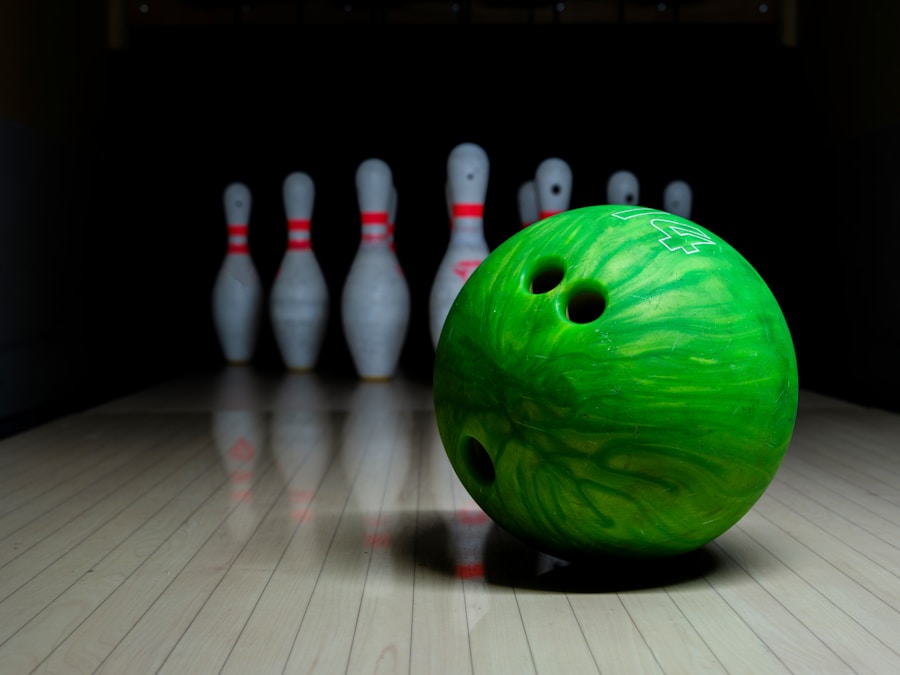
Slowing down your bowling ball speed and improving accuracy are paramount for consistent performance. This isn't about sacrificing power; it's about gaining control, which often translates to more strikes and spares. Think of it like a finely tuned engine versus a raw, untamed force. A slower ball, when delivered correctly, has more time to react to the lane conditions, creating a smoother, more predictable hook and a higher probability of hitting your target with precision. Conversely, a ball traveling too fast can skid past its intended break point, resulting in split leaves or open frames. This article will explore practical strategies to achieve this crucial balance, dissecting the mechanics from your approach to your release, offering actionable advice to refine your game.
The Foundation: Understanding Your Current Speed and Accuracy
Before you can make effective changes, you need to establish a baseline. This involves objectively evaluating your current ball speed and how consistently you hit your target. Without this initial assessment, any adjustments you make will be educated guesses at best.
Self-Assessment Techniques
How do you accurately measure your current performance?
Video Analysis
Utilizing video recording is one of the most powerful tools available. Set up a camera directly behind you, capturing your entire approach and release. Review the footage in slow motion. Pay close attention to:
- Foot Speed: Is your approach hurried or controlled?
- Arm Swing: Is it free-flowing or forced?
- Release Point: Are you consistently releasing the ball at the same spot?
- Ball Trajectory: Does the ball consistently hit your target line?
Many bowling centers now offer video analysis tools, or you can simply use a smartphone on a tripod. The objective is not to critique yourself harshly, but to gather factual data.
Observing Ball Reaction
While video provides a visual, observing the ball's reaction down the lane offers crucial insights into its speed.
- Skid Phase: Does the ball skid too far past the arrows before beginning to hook? This often indicates excessive speed.
- Hook Phase: Is the hook too aggressive or too weak?
- Roll Phase: Does the ball roll out smoothly through the pins, or does it deflect excessively?
A ball that rolls out too early might be too slow, while one that takes too long to react is likely too fast. Identifying these patterns is key.
Pin Carry and Leave Patterns
Your pin carry and the types of leaves you experience can indirectly tell you a lot about your ball speed and accuracy.
- Light Hits: If you're consistently leaving weak splits (e.g., 5-pin, 2-pin), it might indicate your ball is too fast, deflecting off the head pin without enough drive.
- Heavy Hits: While a heavy hit can be good, if it’s consistently leaving Washouts (e.g., 1-2-4-10), it suggests your ball is hitting the pocket too hard and driving through the pins without enough angle.
- Consistent Splits: If you're frequently leaving splits like the 7-10, it could point to inconsistent accuracy in hitting your target.
Remember, this is not an exact science, but rather a correlation. Analyze the patterns over several games.
The Approach: Engineering a Controlled Delivery
Your approach is the runway for your ball’s journey. A smooth, controlled approach sets the stage for a consistent and accurate release. Rushing your approach is akin to accelerating an airplane too quickly on a short runway – it's unlikely to achieve a stable flight.
Slowing Down Your Footwork
Many bowlers mistakenly believe that a faster approach translates to more power. In reality, it often leads to a rushed swing and an uncontrolled release.
Shorter Steps
Experiment with taking slightly shorter steps during your approach. This naturally reduces your overall speed and encourages a more deliberate movement. The goal is to maintain fluidity, not to become choppy.
Softer Plant Step
Focus on a softer, more controlled plant step at the foul line. Instead of stomping, aim for a gentle deceleration as you reach your release point. This prevents your body from surging forward and throwing off your balance.
Metronome Practice
Consider using a metronome app during practice. Start with a comfortable tempo and gradually decrease it, synchronizing your steps to the beat. This helps develop a consistent rhythm.
The Arm Swing: A Pendulum, Not a Hammer
Your arm swing should be a natural, free-flowing pendulum motion. Any forcing or muscling of the ball will invariably lead to increased speed and reduced accuracy.
Gravity-Assisted Backswing
Allow gravity to do the work. Let the ball drop naturally into the backswing without actively pushing it up. A higher backswing doesn't necessarily mean more power; it often means less control.
Relaxed Grip
A death grip on the ball inhibits a free swing. Relax your grip throughout the approach, only firming up gently as you approach the release point. Tension in the hand translates to tension in the arm and shoulder.
Uninterrupted Forward Swing
Avoid any hitches or pauses in your forward swing. The transition from backswing to forward swing should be smooth and continuous, like a perfectly timed arc. Practice drills without pins, focusing solely on the feel of the swing.
The Release: The Moment of Truth
The release is the most critical juncture for controlling ball speed and imparting the desired spin for accuracy. This is where the magic happens, or where it unravels.
Hand Position and Angle
Your hand position at release dictates how much leverage and rotation you apply to the ball.
"Underneath" the Ball
Strive to stay "underneath" the ball for as long as possible through the swing. This means your palm is facing up towards the ceiling as the ball approaches its lowest point. This maximizes your ability to apply lifting action and rotation.
- Avoid "Coming Over the Top": If your hand gets on top of the ball too soon, you'll be pushing it down the lane, generating speed without proper rotation.
The "Shake Hands" Release
Visualize shaking hands with the pins. As you release, your thumb should exit the ball first, followed by your fingers, with your hand rotating slightly left (for right-handers) or right (for left-handers) as you impart side rotation. This promotes a lift and rotation rather than a pure push.
Follow Through: The Extended Conversation
The follow-through isn't just an afterthought; it's the natural extension of a good release and crucial for maintaining balance and consistency. It’s like a conductor’s flourish after the final note – it completes the performance.
Towards Your Target
Your follow-through should be directly in line with your target. If your hand finishes out to the side, it often indicates an inaccurate release.
High and Balanced
Finish with your hand extending high, ideally above your shoulder, and maintain balance. A truncated or unbalanced follow-through suggests a rushed or forced release.
Finger and Wrist Action
Subtle adjustments to your finger and wrist action can significantly impact ball speed and revolution.
Cupped Wrist
A slightly cupped wrist throughout the swing and at release provides more leverage to lift and rotate the ball. Avoid a collapsed or broken wrist, as this reduces power and control.
Finger Engagement
Think about "squeezing" the front of the ball with your fingers as you release. This isn't about gripping tightly, but about using your fingers to apply friction and imparting revs. The amount of finger engagement can be varied to adjust rev rate.
Lane Play and Target Management
Even with a perfectly executed physical game, understanding lane conditions and managing your target is vital for consistent accuracy. The lane is a dynamic environment, constantly changing.
Reading Lane Conditions
Different lane conditions require different strategies for speed and accuracy.
Oiled vs. Dry Lanes
- Oiled Lanes: On heavily oiled lanes, you might need a slightly higher ball speed to ensure the ball gets through the oil pattern to the dry backend. However, too much speed will still cause skid.
- Dry Lanes: On drier lanes, a slower ball speed is often more effective, as the ball will hook earlier. If your ball is too fast on dry lanes, it can over-hook and be difficult to control.
Break Point Adjustment
Your break point – where the ball transitions from skid to hook – is paramount.
- Earlier Break Point: If your ball is sliding too far, focus on slowing down your step and release to encourage an earlier, more controlled hook.
- Later Break Point: Conversely, if your ball is hooking too early, you might need a fractionally faster ball to push it further down the lane.
This is a delicate balance, and often involves subtle changes in speed, not drastic ones.
Target Focus
Where you look during your approach and release critically influences your accuracy.
Arrow Focus
Focus on a specific arrow (usually the second or third from the right or left) as your primary target. Your eyes should be locked on this target throughout your approach. This anchors your aim.
"Looking Through" Your Target
Instead of simply looking at the arrow, try to "look through" it, envisioning the ball traveling past the arrow and into its intended break point. This reinforces the trajectory you want the ball to take.
Adjusting Your Starting Position
If you're consistently missing your target, experiment with small adjustments to your starting position on the approach, 1-2 boards at a time. This allows you to maintain your established target line while subtly altering your angle to the pocket.
Practice and Patience: The Long Game
table{width:100%;border-collapse:collapse;border:2px solid #f2f2f2}tr{display:table-row;vertical-align:inherit;border-color:inherit;line-height:40px}th,td{padding:12px;text-align:left;border-bottom:1px solid #e5e7eb;line-height:40px}
| Strategy | Description |
|---|---|
| Adjusting your starting position | Moving your starting position on the approach closer to the foul line can help reduce ball speed. |
| Shortening your backswing | Reducing the height of your backswing can help control the speed of your release. |
| Using a lighter ball | Switching to a lighter bowling ball can make it easier to control your speed and accuracy. |
| Focusing on a smooth release | Concentrating on a smooth and controlled release can help slow down your ball speed. |
| Practicing spare shooting | Working on picking up spares can improve your accuracy and overall control of the ball. |
Honing your ball speed and accuracy is not an overnight endeavor. It requires consistent practice and a healthy dose of patience. Think of yourself as a sculptor, gradually chipping away at inconsistencies until the desired form emerges.
Deliberate Practice Sessions
Randomly throwing balls down the lane won't yield significant improvement. Your practice sessions must be intentional.
Isolated Drills
Focus on isolating specific components of your game. For example, dedicate 15 minutes solely to your arm swing, or another 15 minutes to your plant step. Don't worry about pin carry during these drills.
Repetitive Drills
Repetition builds muscle memory. Choose one small aspect you want to improve (e.g., slowing down the first step) and repeat it consistently for a set number of shots.
No-Pin Bowling
Practice without pins on the lane occasionally. This removes the pressure of striking and allows you to concentrate purely on your technique, promoting a more fluid and less results-oriented approach.
The Mental Game
Your mindset plays a significant role in your performance.
Embrace Imperfection
Understand that you won't be perfect every shot. Learn from your mistakes rather than letting them derail your focus. Every shot is a learning opportunity.
Focus on Process, Not Outcome
During practice and even in games, concentrate on executing your desired technique rather than solely fixating on the score. The scores will improve organically as your process becomes more refined.
Seek Feedback
Don't be afraid to ask for feedback from experienced bowlers, coaches, or even just another set of eyes watching your form. An external perspective can often spot things you miss.
Improving your ball speed and accuracy is an ongoing journey of refinement. By systematically addressing your approach, arm swing, release, and understanding lane conditions, you'll gain the control needed to elevate your game and achieve more consistent success on the lanes. Consistency isn't born from brute force; it's forged in precision and control.