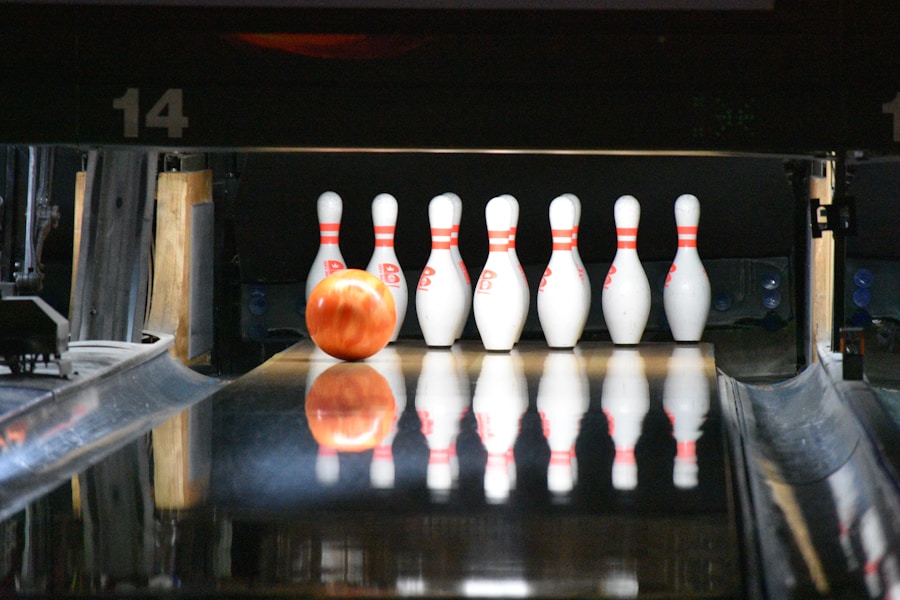
Bowling, at its core, is a sport of precision. For seasoned bowlers and casual enthusiasts alike, the moments when every pin counts can feel like standing at the precipice of a cliff. This is crunch time, and when the pressure mounts, accuracy can be our most valuable ally. This article delves into practical techniques and mental strategies to bolster your bowling accuracy when the stakes are highest.
The Psychology of Pressure: Understanding Your Mind in the Clutch
High-pressure situations in bowling are not just about physical execution; they are profoundly about psychological resilience. The feeling of your heart thudding like a drum against your ribs, or the sudden clarity that every eye in the alley is on you, can significantly disrupt even the most practiced bowler. Understanding how your mind reacts to stress is the first step to controlling it.
The Yerkes-Dodson Law in Action
This well-known psychological principle suggests that performance increases with physiological or mental arousal (stress), but only up to a point. When the arousal becomes too high, performance decreases. In bowling, this means a little nervous energy can sharpen your focus, but too much can lead to shaky hands and misplaced shots. Recognizing your personal threshold for optimal arousal is key.
Cognitive Biases Under Pressure
Confirmation Bias: Seeing What You Expect
When you're anxious about missing, you might subconsciously look for proof that you will miss. Your mind might latch onto every previous "bad" shot, reinforcing your negative expectation. This creates a self-fulfilling prophecy.
Availability Heuristic: Overestimating the Impact of Recent Events
A couple of missed shots can feel like a career-ending streak when you're under pressure. The availability heuristic makes these recent failures loom larger than they statistically are, influencing your confidence and approach to the next ball.
Pre-Shot Routine: Your Anchor in the Storm
A consistent pre-shot routine is more than just habit; it's your mental and physical anchor. Think of it as building a small, safe harbor you can retreat to before launching your next shot. This routine signals to your brain and body that it's time to focus, overriding the external pressures.
Elements of an Effective Pre-Shot Routine
Physical Markers: The Familiar Path
This involves a set sequence of physical actions: your approach, the number of steps, your ball pickup, and your arm swing. This predictability provides a sense of control, even when the outcome feels uncertain.
Mental Rehearsal: Visualizing Success
Before you step onto the approach, take a moment to visualize the perfect shot. See the ball entering the pocket, the pins scattering, and the satisfying sound of a strike. This mental imagery can prime your body and mind for the desired outcome.
Breathing Techniques: The Calm Before the Strike
Simple deep breathing exercises can be incredibly effective. Inhale slowly through your nose, hold for a moment, and exhale slowly through your mouth. This regulates your heart rate and reduces physical tension, allowing for a smoother, more controlled swing.
Mastering the Physical Mechanics Under Duress
When the pressure cooker is on, your well-honed muscle memory can feel like a foreign concept. The key is not to try and force a different technique, but to rely on the fundamentals that have brought you this far, ensuring they remain solid even when your nerves are frayed.
Maintaining a Consistent Approach
Your approach is the foundation of your shot. It's where power is generated and direction is set. In crunch time, any deviation here can cascade into a poor shot.
The Importance of Footwork
Step Consistency: Every Step Counts
Ensure your steps are consistent in length and pace. Imagine each step is a carefully placed brick in a wall; any wobble compromises the entire structure. This consistency helps ensure you arrive at the foul line in the same position for every shot.
Balance at the Foul Line: The Stable Platform
Maintaining good balance at the foul line is crucial for an accurate release. Avoid leaning too far forward or backward. A balanced stance is like a steady ship on a choppy sea – it can weather the minor disturbances.
The Smooth, Uninterrupted Swing
Your swing is an extension of your body, a fluid motion designed for consistency and power. Under pressure, the temptation is to rush or over-exert.
The Pendulum Analogy: Let Gravity Do the Work
Think of your backswing and forward swing as a pendulum. Allow gravity to do most of the work. A smooth, controlled backswing leads to a natural, powerful forward swing. Trying to muscle the ball often results in a jerky, inaccurate release.
Wrist Position: The Release Point Revelation
Your wrist position at the point of release dictates the ball's rotation and, consequently, its trajectory. Maintaining a firm but not tense wrist, consistent with your practiced technique, is vital. Imagine holding a fragile egg; you want to keep it secure without crushing it.
The Release: The Moment of Truth
The release is where all your preparation converges. It's the final act of your pre-shot routine and the genesis of your ball's journey.
Targeting the Pocket: Precision Over Power
When accuracy is paramount, focus on hitting your intended target in the pocket. This might mean adjusting your speed slightly, but never at the expense of a clean release. Think of it as threading a needle; it requires delicate control, not brute force.
Follow-Through: The Unfinished Symphony
A proper follow-through is an indicator of a complete and controlled swing. It should be a natural extension of the forward swing, with your arm continuing upwards after the release. A shortened follow-through often signifies a rushed or incomplete swing.
Strategic Adjustments: Adapting Your Game When It Matters Most
Sometimes, the lane conditions or the opposing team's performance demand that you adapt your strategy. This isn't about panicking and changing everything, but about making calculated adjustments based on what the lane is telling you.
Reading the Lane: The Whispers of the Oil
The oil pattern on the bowling lane is a fluid entity that changes throughout a game. Being able to read these changes allows you to adjust your line and ball reaction.
Recognizing Ball Motion
Early Hook vs. Late Hook
Does your ball hook too early, losing its power by the pins, or does it go long and miss the pocket? Understanding this helps in choosing the right ball and adjusting your starting position.
Flare and Backend Reaction
Observe how much your ball flares and how aggressively it reacts on the backend. This provides clues about the oil pattern and how it's affecting your ball’s path to the pocket.
Ball Selection: The Right Tool for the Job
Having a quiver of bowling balls, each designed for different lane conditions, is a significant advantage. In crunch time, knowing which ball will give you the best chance of success is crucial.
Matching Ball to Condition
Dry Lanes: Surface and Core Considerations
On drier lanes, you might need a ball with more surface friction to generate hook, or a ball with a less aggressive core to avoid overreacting.
Heavy Oil: Smoothness and Control
On heavily oiled lanes, a ball with a polished surface and a more forgiving core can help create a smoother, more controllable ball motion through the oil.
Pin Attack Strategy: Knowing When to Go for the Kill
In some situations, especially when facing a split or a tricky spare, your strategy for attacking the pins needs to be precise.
The Art of the "Brooklyn" Strike
This refers to hitting the pocket from the opposite side, usually resulting in a strike when the ball is thrown with the right angle and speed. It requires confidence and a precise understanding of your ball's reaction.
Spare Shooting: The Unsung Hero of Accuracy
Spare shooting is often where games are won or lost, especially in pressure situations. Don't underestimate the importance of practicing and executing your spare shots with the same focus as your strike attempts.
Mental Fortitude: Building Resilience Under Fire
Beyond the physical and strategic, the mental game is perhaps the most critical factor in high-pressure bowling. Developing mental fortitude allows you to stay calm, confident, and focused when it counts the most.
Overcoming Fear of Failure
The fear of missing can be paralyzing. This fear often stems from focusing on the negative consequences rather than the present task.
Reframing Challenges: Opportunity, Not Threat
Instead of viewing a crucial shot as a potential failure, reframe it as an opportunity to showcase your skills and overcome adversity. This shift in perspective can reduce anxiety.
Embracing the Present Moment: One Ball at a Time
The past is gone, and the future is yet to happen. In crunch time, it's vital to bring your focus back to the immediate task: the next ball. Don't let a previous mistake or the anticipation of the next frame derail your current shot.
The Power of Positive Self-Talk
What you say to yourself before, during, and after a shot can have a profound impact on your performance. This isn't about delusional optimism, but about constructive and encouraging inner dialogue.
Affirmations: Reinforcing Belief
Use short, positive affirmations that resonate with you. Examples include: "I am balanced," "I have a smooth swing," or "I hit my mark."
Problem-Solving Statements: Addressing Specific Issues
If you're struggling with a particular aspect, use problem-solving statements. For example, instead of "I'm going to miss this," try "I need to focus on my follow-through."
Post-Shot Analysis: Learning Without Dwelling
After each shot, regardless of the outcome, take a brief moment to analyze what happened. This is not about beating yourself up over a mistake, but about gathering information.
Objective Observation: Detaching Emotion
Observe the shot objectively. Did your approach feel right? Was your swing smooth? Did you release the ball as intended? Detach emotion from the observation to get a clearer picture.
Constructive Feedback: Identifying Next Steps
Use this observation to inform your next shot. If you pulled your shot, perhaps you need to widen your stance slightly. If your ball hooked early, you might move left to find drier boards.
Practice Strategies: Conditioning Your Mind and Body for the Pressure Cooker
table{width:100%;border-collapse:collapse;border:2px solid #f2f2f2}tr{display:table-row;vertical-align:inherit;border-color:inherit;line-height:40px}th,td{padding:12px;text-align:left;border-bottom:1px solid #e5e7eb;line-height:40px}
| Technique | Accuracy Improvement |
|---|---|
| Visualization | 10% |
| Deep Breathing | 15% |
| Focusing on Target | 20% |
| Positive Self-Talk | 12% |
The most effective way to improve accuracy in high-pressure situations is to simulate those situations in your practice sessions. This helps build the muscle memory and mental resilience needed when the real pressure is on.
Simulated Pressure Drills
These drills are designed to mimic the intensity of a game situation.
The "Last Frame" Drill
At the end of a practice session, simulate the final frame of a close game. Imagine you need a strike or a specific spare to win. Commit to that outcome and execute your shots with the same focus you would in a real match.
"Scorecard Challenge"
Set yourself challenges involving specific scores or stringing together strikes and spares under simulated pressure. For instance, aim to bowl three strikes in a row, or convert a specific difficult spare; if you fail, restart the challenge.
Focusing on Weaknesses Under Pressure
Identify the aspects of your game that tend to falter under pressure and dedicate specific practice to them.
Spare Conversion Practice
Spend dedicated time practicing your spares. This includes your common spares like the 7-pin and 10-pin, but also less frequent ones. Use a spare system that ensures you’re hitting the correct part of the pin deck.
Ball Speed and Accuracy Drills
Practice throwing the ball at specific speeds. Use a radar gun if possible, and try to hit target areas on the lane with consistent speed. This builds control over a crucial variable.
Partner Practice and Peer Feedback
Practicing with a partner or a group can introduce a natural element of competition and accountability.
Competitive Practice Games
Engage in practice games with friends where the stakes, even if imaginary, are raised. This can help you get accustomed to the feeling of bowling under a watchful eye.
Constructive Criticism: Aiding Growth
Ask your practice partners for honest feedback on your approach, swing, and release. An external perspective can often highlight issues you might not be aware of.
By understanding the psychological and physical aspects of pressure, and by implementing structured practice strategies, you can equip yourself with the tools to maintain and even enhance your bowling accuracy when the crunch time strikes. Remember, consistency built through deliberate practice is your greatest asset, turning the anxiety of high-stakes moments into opportunities for triumph.