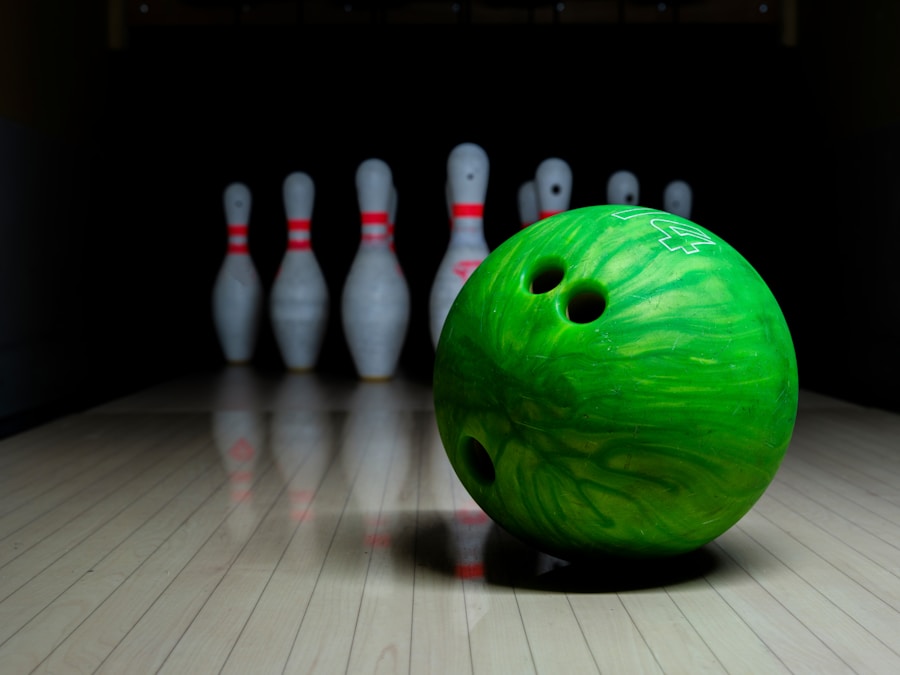
Bowling success, at its core, hinges on two fundamental achievements: consistently striking and effectively converting spares. The strategies involved are not merely about raw power or a lucky roll; they are a calculated dance of physics, precision, mental fortitude, and adaptability. This article will dissect the essential strategies competitive bowlers employ to maximize their pinfall, moving beyond the casual game to the nuanced demands of serious competition.
Understanding the Lane: Your Primary Battlefield
Before even stepping onto the approach, a competitive bowler must develop a profound understanding of the lane itself. It's not a uniform surface; it's a dynamic, ever-changing environment, and your ability to read it is your most powerful weapon.
Lane Oil Patterns: The Invisible Landscape
Every competitive lane is coated with a specific oil pattern. These patterns, often unseen by the untrained eye, dictate how the ball will react. They are the invisible rivers and mountains your ball must navigate.
Oil Length
The length of the oil pattern significantly impacts where your ball will start to hook. Shorter patterns mean the ball will react earlier, while longer patterns require the ball to travel further down the lane before finding friction. Understanding this helps you choose the right ball and adjust your approach.
Oil Volume
The amount of oil dictates the ball's skid and hook potential. Heavy oil reduces friction, causing the ball to skid more and hook less. Lighter oil, conversely, offers more friction, leading to an earlier and sharper hook. Adapting to oil volume is crucial for maintaining a consistent ball reaction.
Oil Shape
Beyond length and volume, the shape of the oil pattern – often described as a "Christmas Tree" or "Reverse Christmas Tree" for example – influences the angle at which the ball will enter the pocket. Knowing the pattern shape helps you determine the optimal breakpoint and entry angle.
Lane Transition: The Evolving Challenge
As games progress, the oil on the lane is progressively pushed around and depleted by bowling balls. This phenomenon, known as lane transition, is a constant and inevitable challenge.
Push Down and Carry Down
Oil from the front of the lane is gradually pushed down by each ball's rotation, creating a longer effective oil pattern. This "carry down" reduces friction further down the lane, making balls skid more.
Oil Depletion and Breakdown
Conversely, oil in the mid-lane and back-end is depleted, causing the ball to "see" friction earlier. This "breakdown" makes balls hook more aggressively. A competitive bowler must constantly monitor these changes and adjust their line and ball choice accordingly. Ignoring lane transition is akin to trying to navigate a shifting sand dune with a static map.
Mastering Your Release: The Foundation of Consistent Strikes
Your release is the engine of your shot, dictating ball speed, rev rate, and axis rotation – all critical components for striking. Achieving a consistent and powerful release is a lifelong pursuit, but several key elements are paramount.
Ball Speed: The Crucial Variable
Ball speed directly influences how much a ball will hook and how it reacts to oil patterns. Too slow, and the ball will hook excessively and burn up its energy too soon. Too fast, and it may not hook enough or deflect off the pins.
Matching Speed to Rev Rate
The most effective ball speed is often a balance with your rev rate. A higher rev rate might allow for a slightly slower speed while maintaining pin action. Conversely, a lower rev rate might necessitate a faster speed to drive through the pins effectively.
Adjusting Speed for Lane Conditions
On slicker conditions, a slightly faster speed can help postpone the ball's hook, allowing it to get further down the lane. On drier conditions, a slower speed can prevent over-hooking and maintain control.
Rev Rate and Axis Rotation: The Invisible Spin
The rev rate (revolutions per minute) and axis rotation (the axis around which the ball rotates) are critical for generating power and controlling ball motion.
High Rev Rate Benefits
A higher rev rate imparts more energy into the ball, leading to a stronger backend reaction and better pin-carrying ability. It also allows for more forgiveness on less-than-perfect shots.
Axis Rotation for Entry Angle
Axis rotation, often described as side rotation or forward roll, dictates the ball's entry angle into the pocket. A more forward roll typically leads to a straighter shot, while increased side rotation creates a sharper hook. Professional bowlers meticulously control these factors to achieve optimal pin deflection.
Strategic Ball Selection: Your Arsenal for Success
A competitive bowler's bag is more than just a collection of balls; it's a carefully curated arsenal, each ball designed for specific lane conditions and shot types.
Coverstock Material: The Surface Interaction
The coverstock, the outer layer of the bowling ball, is the primary interface with the lane. Its composition dictates how the ball reacts to oil and friction.
Reactive Resin
The most common coverstock for competitive play, reactive resin offers a wide range of reactions depending on its formulation. Solid reactive offers more traction in oil, pearl reactive skips further down the lane before hooking, and hybrid reactive offers a blend of characteristics.
Urethane
Urethane balls generally provide a smoother, more controlled reaction, ideal for drier conditions or when a less aggressive hook is desired. They tend to be less susceptible to lane transition.
Plastic/Polyester
Primarily used for spare shooting, plastic balls offer minimal hook, allowing for a precise straight shot at specific pins.
Core Design: The Inner Engine
The core, or weight block, within the ball influences its dynamics, including its moment of inertia (RG) and differential.
Low RG Cores
Low RG cores typically rev up faster, leading to an earlier hook. They are often preferred on heavier oil patterns where an early, strong continuation is needed.
High RG Cores
High RG cores tend to skid further down the lane before revving up, resulting in a later and sharper hook. These are often used on medium to dry conditions.
High Differential Cores
High differential cores create a larger flare potential, meaning the ball will utilize more of its coverstock as it rolls down the lane, leading to a more aggressive backend reaction.
Low Differential Cores
Low differential cores produce less flare, resulting in a smoother, more controlled reaction with less over-reaction.
Advanced Spare Shooting: The Unsung Hero
While strikes garner the most attention, proficient spare shooting is the bedrock of high scores. Missed spares are score killers, and a competitive bowler sees every non-strike frame as an opportunity for conversion.
The 3-6-9 System (and Variations): A Foundational Approach
The 3-6-9 system is a widely taught method for spare shooting, providing a consistent reference point for pin adjustments.
Adjusting for Right-Handed Bowlers
For a right-handed bowler, the basic premise is to move 3 boards right for every pin left of the head pin. For example, the 7 pin (far left) requires moving 9 boards right from your strike mark. Conversely, for pins to the right of the head pin, you move left.
Adjusting for Left-Handed Bowlers
Left-handed bowlers apply the inverse, moving 3 boards left for every pin right of the head pin, and vice-versa.
Limitations and Personalization
While a great starting point, the 3-6-9 system isn't infallible. Lane conditions, ball speed, and personal release all necessitate personalized adjustments. Competitive bowlers often develop their own refined versions of this system based on extensive practice.
Straight Ball vs. Hooking Ball for Spares: The Strategic Choice
The decision to throw a straight ball or a hooking ball for spares is a strategic one, dictated by the specific leave and lane conditions.
The Power of the Plastic Ball
For single-pin leaves or tricky combinations, a plastic spare ball provides a consistent straight trajectory, minimizing reaction to oil and ensuring accurate pin contact. This is your scalpel for precision.
When to Hook for Spares
In certain scenarios, such as converting multiple pins that are spread across the lane, a controlled hook with a strike ball can be advantageous. This is particularly true for "bucket" spares or when attempting to drive through pins. However, this carries more risk due to potential over-reaction.
Mental Approach to Spares: The Unwavering Focus
The mental game is as crucial for spares as it is for strikes. Pressure can cause even seasoned bowlers to falter on seemingly easy conversions.
Visualization and Routine
Before every spare attempt, visualize the ball hitting the target pin(s). Develop a consistent pre-shot routine to maintain focus and reduce distractions.
Accepting the Miss and Moving On
Every bowler misses spares. The ability to quickly process the miss, understand why it happened, and immediately refocus on the next shot is a hallmark of a mentally tough competitor. Lingering on a miss will only snowball into further errors.
The Mental Game: Your Inner Compass
Beyond physical prowess, mental fortitude often separates good bowlers from great ones. The lane is as much a mental battlefield as a physical one.
Maintaining Focus and Composure Under Pressure: The Eye of the Storm
Competitive bowling is replete with high-stakes moments. The ability to remain focused and composed when every pin counts is paramount.
Breathing Techniques
Simple, controlled breathing exercises can help regulate heart rate and calm nerves in high-pressure situations.
Positive Self-Talk
Replacing negative thoughts with constructive, positive affirmations can drastically improve resilience and performance.
Focusing on Process, Not Outcome
Instead of fixating on the score or the result, concentrate on executing your shot process correctly. The scores will follow.
Adaptability and Problem Solving: The Chess Match
Competitive bowling is a dynamic sport. Lane conditions change, opponents rise and fall, and breaks can go for or against you. Your ability to adapt and solve problems on the fly is a critical skill.
Reading Your Ball Reaction
Pay close attention to how your ball is reacting. Is it hooking too much or too little? Is it hitting the pocket too high or too thin? These observations are your data points.
Making Strategic Adjustments
Based on your ball reaction and lane readings, be prepared to adjust your starting position, target, ball choice, speed, or release. Sometimes a single board adjustment can make all the difference. This iterative process of observation, analysis, and adjustment is the core of competitive bowling.
Learning from Opponents
Observe how your opponents' balls are reacting. What lines are they playing? What balls are they using effectively? This information can provide valuable insights into the lane conditions.
Mastering these strategies – from understanding the lane's invisible landscape to commanding your mental state – requires dedication, practice, and a relentless pursuit of knowledge. Competitive bowling is a journey of continuous learning and refinement, where every strike is a triumph of precision and every spare a testament to grit. By approaching the game with this comprehensive mindset, you can elevate your performance and consistently achieve higher scores.