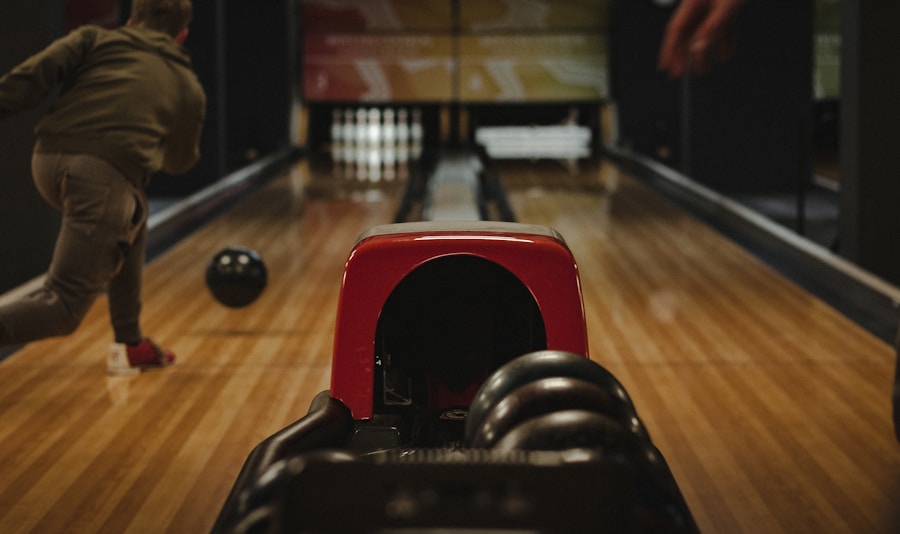
Mastering the straight ball in bowling involves a methodical approach to your stance, approach, release, and follow-through, focusing on consistency and precision to achieve optimal pin contact. While often overshadowed by the allure of hooks, a well-executed straight ball is a formidable weapon, particularly for beginners establishing fundamentals or seasoned bowlers facing tricky lane conditions. This guide will dismantle the complexities of the straight ball into manageable components, providing a blueprint for achieving consistent strikes.
The Foundation: Stance and Setup
Your bowling journey begins even before you take your first step. A stable and repeatable stance is the bedrock upon which your entire delivery is built. Think of it as the launchpad for your shot; any instability here will cascade down through the entire process.
Finding Your Starting Position
Begin by positioning yourself on the approach, typically at a consistent mark relative to the foul line. Most bowlers find success starting with their dominant foot slightly behind the other. The goal is to create a comfortable and balanced base.
- Foot Placement: Your feet should be shoulder-width apart, or slightly narrower, providing a stable platform. Experiment with slight variations to find what feels most balanced for you.
- Ball Position: Hold the ball comfortably in your dominant hand, supported by your non-dominant hand underneath. The ball should be held at a height that allows for a smooth pendulum swing, typically between waist and chest level. Avoid holding it too high, which can lead to tension, or too low, which can hinder your swing.
- Body Alignment: Your shoulders, hips, and feet should be aligned directly with your target down the lane. This visual alignment is crucial for directing the ball accurately. Imagine a laser beam extending from your shoulder through your ball and directly to your target.
Grip and Wrist Position
The way you hold the ball significantly influences your release and, consequently, the ball's trajectory. For a straight ball, the emphasis is on a firm, yet relaxed, grip that minimizes any rotational input.
- Fingertip Grip: Most bowlers utilize a fingertip grip, where your fingers are inserted only to the first knuckle, allowing for a clean release.
- Conventional Grip: Beginners might start with a conventional grip, where fingers are inserted up to the second knuckle. While providing more control, it can make a smooth release slightly more challenging.
- Thumb Position: Your thumb should be fully inserted into the thumb hole, pointing towards 10 o'clock or 2 o'clock, depending on whether you're right or left-handed, respectively. This minimizes rotational forces.
- Wrist Position: Maintain a firm, straight wrist throughout your stance and approach. Avoid any bending or cocking of the wrist, as this can introduce unwanted spin and deviate the ball from a straight path. Imagine your wrist as a sturdy bridge, unwavering and connected to your arm.
The Approach: A Symphony of Movement
The approach is not just walking; it's a carefully choreographed sequence of steps and arm swings designed to generate momentum and position you for a clean release. Each step and swing is interconnected, forming a chain reaction that culminates in the delivery of the ball.
The Four or Five-Step Approach
While variations exist, the four-step approach is a common and effective starting point for straight ball delivery.
- Step 1 (Pushaway): As your dominant foot (right for right-handers, left for left-handers) moves forward, simultaneously push the ball away from your body in a downward arc. This initiates the pendulum swing. The pushaway should be smooth and controlled, not a forceful shove.
- Step 2 (Backswing Initiation): Your non-dominant foot moves forward as the ball continues its downward and backward swing. Your dominant arm should be relatively straight, allowing gravity to do most of the work.
- Step 3 (Peak Backswing): Your dominant foot moves forward as the ball reaches the apex of its backswing. The height of your backswing should be comfortable and proportionate to your body; avoid forcing it too high, which can disrupt balance.
- Step 4 (Slide and Release Preparation): Your non-dominant foot slides forward into the foul line as the ball begins its forward swing. This is the crucial moment for synchronizing your body movement with the ball's trajectory.
Timing and Tempo
Timing is paramount. The ball's swing and your footwork should be synchronized, creating a continuous, fluid motion.
- Smooth Acceleration: Your approach should gradually accelerate, culminating in maximum speed as you approach the foul line. Think of it as a train gradually gaining speed, not a sudden burst.
- Consistent Rhythm: Practice maintaining a consistent tempo. This not only improves accuracy but also makes your approach more repeatable. Using a metronome or counting silently can help establish a rhythm.
The Release: The Moment of Truth
The release is the most critical phase for a straight ball. It's where all the preceding efforts converge to impart the desired direction and velocity to the ball. Precision and consistency are the hallmarks of a successful straight release.
Straight-Line Delivery
The objective is to release the ball with minimal side spin and maximum forward roll.
- Thumb First: As your arm swings forward, your thumb should exit the ball first, followed by your fingers. This ensures a clean, straight release.
- Palm Forward: At the point of release, your palm should be facing directly forward, towards your target. This prevents any inadvertent wrist rotation that could induce hook or slice.
- Target Focus: Maintain your visual focus on your target down the lane. Your eyes act as a guide, helping your arm direct the ball precisely.
Release Point
The release point refers to the exact moment and location where the ball leaves your hand. For a straight ball, this is typically at the bottom of your forward swing, just past your sliding foot.
- Extension Towards Target: Your arm should extend fully towards your target during the release. Imagine pushing the ball straight down the lane, not lifting it up or rolling it sideways.
- Flat Hand: Your hand should remain flat, with your fingers pointing straight ahead, as the ball rolls off them. Avoid any flicking or cupping of the wrist, which can introduce spin.
The Follow-Through: Sustaining Momentum
The follow-through is not merely an afterthought; it's an integral part of the release that ensures consistent direction and maintains balance. It’s the natural extension of your arm swing, guiding the ball even after it has left your hand.
Arm and Hand Position
A proper follow-through mimics the extension of your release, emphasizing a straight trajectory.
- Pointing to the Target: Your arm should continue to swing upwards and outwards, pointing directly at your target down the lane. Think of your arm as a bow, and your hand as the arrow, continuing its path even after the release.
- "Handshake" Position: Some coaches describe the ideal follow-through hand position as if you are shaking hands with an imaginary person directly in front of you, with your palm facing the target.
Balance and Stability
Maintaining balance throughout the follow-through is crucial for repeatability and injury prevention.
- Hold the Finish: After the release, hold your follow-through position for a moment, ensuring you haven't lost your balance. This helps engrain the correct motion into your muscle memory.
- Support Arm: Your non-dominant arm can be extended outwards for counterbalance, similar to a tightrope walker, helping you maintain stability during and after the release.
Practice and Refinement: The Path to Perfection
table{width:100%;border-collapse:collapse;border:2px solid #f2f2f2}tr{display:table-row;vertical-align:inherit;border-color:inherit;line-height:40px}th,td{padding:12px;text-align:left;border-bottom:1px solid #e5e7eb;line-height:40px}
| Metrics | Value |
|---|---|
| Strike Rate | 75% |
| Average Speed | 20 mph |
| Accuracy | 90% |
| Spin Rate | 500 RPM |
Even with a flawless understanding of technique, consistent practice is the only way to transform knowledge into skill. Think of practice as the sculptor’s chisel, slowly revealing the masterpiece within.
Drills for Straight Ball Mastery
Targeted drills can isolate specific aspects of your technique, allowing for focused improvement.
- One-Step Drill: Stand at the foul line with the ball already in the forward swing position. Take one step and release, focusing solely on your release point and follow-through.
- Foul Line Drill: Practice your full approach without a ball, focusing on footwork, timing, and balance. Imagine the ball in your hand and visualize the entire process.
- Pendulum Swing Drill: Stand still and practice just your arm swing, ensuring it's smooth, straight, and consistent, without any body movement.
Understanding Lane Conditions
While this guide focuses on the straight ball, understanding how lane conditions affect ball motion is vital for strategic play.
- Oil Patterns: Different oil patterns can significantly alter how a ball reacts. A straight ball is generally less affected by oil patterns compared to a hook ball, making it a reliable option on various surfaces.
- Targeting: On heavily oiled lanes, a straight ball aimed directly at the pocket (1-3 for right-handers, 1-2 for left-handers) can provide a consistent path. On drier lanes, a straight ball can still be effective, though you might need to adjust your target slightly to avoid premature friction.
By meticulously applying these principles and dedicating yourself to consistent practice, you will unlock the full potential of your straight bowling technique. The straight ball, when perfected, is a testament to precision and control, consistently delivering strikes and building a strong foundation for any bowler's arsenal. Embrace the journey of refinement, and watch your scores soar.