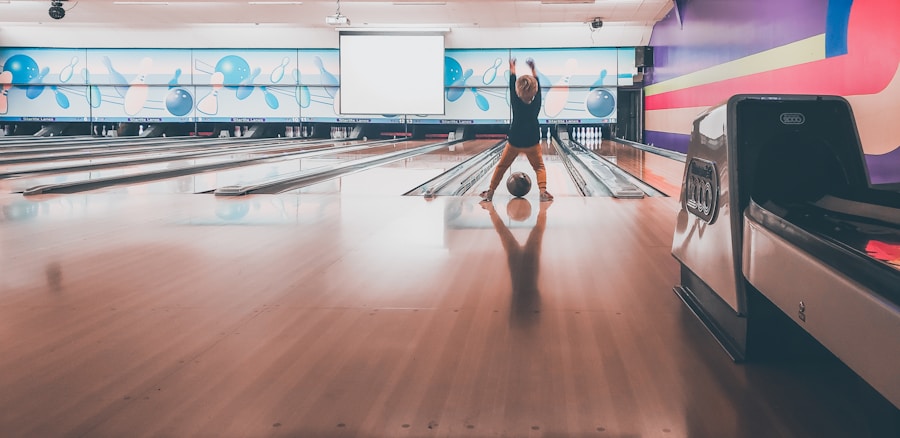
To elevate your bowling game, consistent and targeted practice is key. This article outlines effective practice routines designed to hone specific skills, improve consistency, and ultimately lead to more strikes and spares.
Building the Foundation: The Pre-Shot Routine
A solid pre-shot routine is the bedrock of consistent bowling. It’s your mental and physical warm-up before each throw, acting as a reliable compass to guide your ball down the lane. Without this, your shots can become erratic, like a ship without a rudder.
Mental Preparation
Before even stepping onto the approach, engage your mind. This isn't about grand affirmations, but a focused mental checklist.
Visualization
See the shot before you throw it. Imagine the ball's trajectory, its interaction with the lane oil, and the satisfying pin fall. This mental rehearsal primes your body for the action.
Breathing Techniques
Deep, controlled breathing is crucial for managing nerves and maintaining calm. Before each shot, take a slow inhale, hold it briefly, and exhale steadily. This simple act can significantly reduce tension.
Focusing on the Target
Identify your specific target on the lane – often a set of dots or a specific board. Train your eyes to lock onto this point; it's your aiming post.
Physical Warm-up
Your body needs to be ready for the repetitive motion of bowling. Don't skip this step; it's an investment in injury prevention and optimal performance.
Dynamic Stretching
Focus on movements that prepare your muscles for action. Arm circles, torso twists, and leg swings are beneficial. Avoid static stretching before bowling, as it can reduce muscle power.
Grip and Release Practice (Dry)
Practice your grip and release motion off the lane. This reinforces muscle memory without the added pressure of a live ball or the complexity of lane conditions.
Mastering the Approach: Footwork and Balance
Your approach is the engine of your delivery. Consistent footwork translates directly into consistent ball delivery. Think of your approach as a well-oiled machine; each part must work in harmony.
The Four-Step Approach
This is a common and effective approach. Focus on uniformity in your stride length and timing.
Ball Step
The initial step with the ball. Ensure it's a natural, comfortable stride.
Second Step
The step bringing the ball forward. Maintain a steady tempo.
Slide Step
This crucial step provides balance and control. Practice a smooth, controlled slide.
Finish Position
Your stance after the release. It should be balanced, facing your target, demonstrating control.
Tempo and Rhythm
Develop a consistent pace for your approach. Rushing will lead to a rushed release and inaccurate shots. Slowing down too much can also disrupt your timing. Experiment to find your optimal rhythm.
Maintaining Balance
Balance is paramount throughout the entire approach and release. If you’re falling off to one side, your balance is off, and so will be your shot.
Core Engagement
A strong, engaged core provides stability. Think of it as the central pillar holding everything steady.
Low Center of Gravity
As you approach and slide, maintain a lowered center of gravity. This increases your stability.
The Art of the Release: Spin and Control
Your release is where the magic happens, where you impart spin and direction to the ball. This is the fine-tuning that differentiates good bowlers from great ones. It’s not just about throwing the ball; it's about guiding it with intention.
Understanding Ball Rotation (Spin)
Different spins create different ball reactions on the lane. Experiment to understand how each affects your game.
Lift (Flippers)
Imparts backspin, keeping the ball straighter. Useful for accuracy.
Rotation (Hook)
Creates side spin, causing the ball to curve. Essential for hitting the pocket.
Follow-Through
A complete and consistent follow-through is crucial for a clean release and optimal spin. Imagine your hand continuing its path towards your target.
Hand Position at Release
The position of your hand and fingers at the point of release dictates the spin and direction of the ball. Deviations here will send your ball on an unintended path.
Fingers Upward for Lift
Keeping your fingers more upward on release generates more lift and less hook.
Fingers Sideways for Hook
Rotating your hand to the side as you release imparts hook.
Thumb Exit
Ensure your thumb exits the ball cleanly without forcing or gripping. This is a common point of error that can kill your spin.
Adjusting to Lane Conditions: Oil Patterns and Ball Reaction
Lanes are not static; they change. Understanding oil patterns and how your ball reacts to them is like being a meteorologist for the bowling alley. You need to read the signs and adapt.
Recognizing Oil Patterns
The distribution of oil on the lane significantly impacts how the ball travels. Learn to identify common patterns like "house shot" or "sport patterns."
Early Oil vs. Late Oil
Early oil means more friction further down the lane; late oil means the ball will skid further before hooking.
Transition Zones
The areas where the oil concentration changes are critical. Watch how your ball reacts in these zones.
Ball Selection and Weight
Different balls are designed for different conditions. Choosing the right ball weight is also essential for control and power.
Reactive Resin Balls
These balls are designed to hook by absorbing some of the lane oil.
Urethane Balls
Less aggressive hook, better for drier conditions or when you need more control.
Plastic/Polyester Balls
Minimal hook, ideal for spares or very dry lanes.
Making Adjustments
When your ball isn't reacting as expected, you need to adjust your approach, target, or even your ball.
Moving Your Feet
If your ball is hooking too early, move your feet further left (for right-handers). If it's hooking too late, move further right.
Changing Your Target
Sometimes a subtle shift in your aiming point can align your ball with the correct part of the lane.
Ball Speed
Slight adjustments to your ball speed can also influence its hook potential and lane reaction.
Practice Drills for Skill Development
table{width:100%;border-collapse:collapse;border:2px solid #f2f2f2}tr{display:table-row;vertical-align:inherit;border-color:inherit;line-height:40px}th,td{padding:12px;text-align:left;border-bottom:1px solid #e5e7eb;line-height:40px}
| Practice Routine | Description |
|---|---|
| Warm-up | A series of light stretches and warm-up throws to prepare the body for bowling. |
| Target Practice | Focusing on hitting specific pins or areas of the lane to improve accuracy. |
| Spares Practice | Dedicated time to work on picking up spares, a crucial skill for consistent scoring. |
| Release and Follow-through | Concentrating on the release and follow-through to ensure a smooth and effective delivery. |
| Adjustment Drills | Practicing making adjustments to line and speed to adapt to changing lane conditions. |
To truly improve, you need structured practice. These drills are designed to isolate and strengthen specific aspects of your game.
Spare Shooting Drills
Consistent spare shooting is the hallmark of a successful bowler. You can’t win by leaving spares.
The Ten-Pin Drill
Focus solely on converting the ten-pin. This requires precise targeting and release.
The Seven-Pin Drill
Similarly, dedicate time to the seven-pin. This often requires a different angle of approach.
Brooklyn Strikes (for spares)
Sometimes, converting a spare feels like a Brooklyn strike – unexpected but welcome! Think of this as practicing those "difficult" spares.
Picking Up Corner Pins
Practice picking up the 7-pin (for right-handers) and 10-pin (for left-handers). These often require specific adjustments to your stance and target.
Strike-Focused Drills
These drills aim to improve your pocket hits and strike conversion.
The "Bucket" Drill
Focus on hitting the pocket consistently, aiming for a "bucket" (the 1-3 pins) or a "Brooklyn" (the 1-2 pins for right-handers).
Foul Line to Foul Line Drill
Roll the ball from the foul line to the far foul line without the ball reaching the pins. This focuses on your swing and release without the distraction of pin fall.
The First Arrow Drill
Focus on hitting a specific arrow on the lane with every shot. This hones your accuracy and ability to adjust to lane conditions.
Consistency Drills
These exercises promote repetition and muscle memory.
The "Five-in-a-Row" Drill
Aim to get five consecutive strikes or spares with a specific ball or on a particular lane condition.
The "One-Step" Drill
Stand closer to the foul line and take only one step before releasing the ball. This simplifies the approach and helps focus on your swing and release.
The "No-Step" Drill
Stand directly on the foul line and deliver the ball with only your arm swing. This drill is excellent for isolating your release and hand action.
By integrating these routines and drills into your practice sessions, you'll build a stronger mental game, refine your physical execution, and develop the adaptability needed to conquer the lanes. Remember, consistency is the engine of success, and dedicated practice is the fuel that powers it.