Bowling is a popular sport and recreational activity that has been enjoyed by people of all ages for centuries. The game involves rolling a heavy ball down a narrow lane in an attempt to knock down a set of pins at the other end. While bowling is often seen as a casual pastime, it is also a highly competitive sport with a professional circuit that attracts top athletes from around the world. Professional bowling requires a high level of skill, physical fitness, and mental focus, making it a challenging and rewarding pursuit for those who choose to compete at the highest level.
The Physical and Mental Demands of Professional Bowling
Professional bowling is a physically demanding sport that requires strength, flexibility, and endurance. Bowlers must be able to generate enough power to propel a heavy ball down the lane with accuracy and consistency. This requires strong legs, core muscles, and upper body strength. In addition to physical strength, professional bowlers must also possess mental toughness and focus. The ability to maintain concentration and composure under pressure is crucial for success in competition. Professional bowlers must be able to analyze lane conditions, adjust their technique, and make split-second decisions in order to achieve the best possible results.
On the mental side, professional bowlers must also be able to handle the pressure of competition. The ability to stay calm and focused in high-stakes situations is essential for success in professional bowling. Additionally, professional bowlers must be able to adapt to changing lane conditions and make quick decisions in order to maximize their performance. This combination of physical and mental demands makes professional bowling a challenging and dynamic sport that requires a high level of skill and dedication.
The Equipment and Techniques Used in Professional Bowling
Professional bowlers use specialized equipment and techniques to maximize their performance on the lanes. The most important piece of equipment for a bowler is the ball. Professional bowlers typically use custom-fitted balls that are designed to match their individual style and preferences. These balls are made of a durable plastic or resin material and are weighted to the specific preferences of the bowler. In addition to the ball, professional bowlers also use specialized shoes that are designed to provide traction and stability on the approach and release.
In terms of technique, professional bowlers use a variety of different styles and approaches to deliver the ball down the lane. The most common technique is the traditional 4-step approach, which involves taking four steps before releasing the ball. However, some bowlers use a 5-step or 6-step approach, depending on their individual preferences and physical abilities. In addition to the approach, professional bowlers also use a variety of different release techniques to generate power and accuracy. These techniques include the hook, straight ball, and backup ball, each of which requires a different hand position and release angle.
The Competitive Environment in Professional Bowling
The professional bowling circuit is a highly competitive environment that attracts top athletes from around the world. The Professional Bowlers Association (PBA) is the premier organization for professional bowlers, hosting a series of tournaments throughout the year that offer substantial prize money and prestige. In addition to the PBA Tour, there are also international competitions such as the World Bowling Tour and the QubicaAMF Bowling World Cup that attract top talent from around the globe.
Competition in professional bowling is fierce, with bowlers competing in a variety of different formats including singles, doubles, trios, and team events. Each format presents its own unique challenges and requires a different set of skills and strategies. In addition to individual events, professional bowlers also compete in team events such as the Weber Cup and the PBA League, which require strong communication and teamwork in order to succeed.
The Social and Recreational Aspects of Bowling
In addition to its competitive aspects, bowling also has a strong social and recreational component that makes it an enjoyable activity for people of all ages. Many people participate in bowling leagues and clubs as a way to socialize with friends and meet new people. Bowling leagues provide an opportunity for friendly competition and camaraderie, as well as a chance to improve skills and learn from more experienced bowlers.
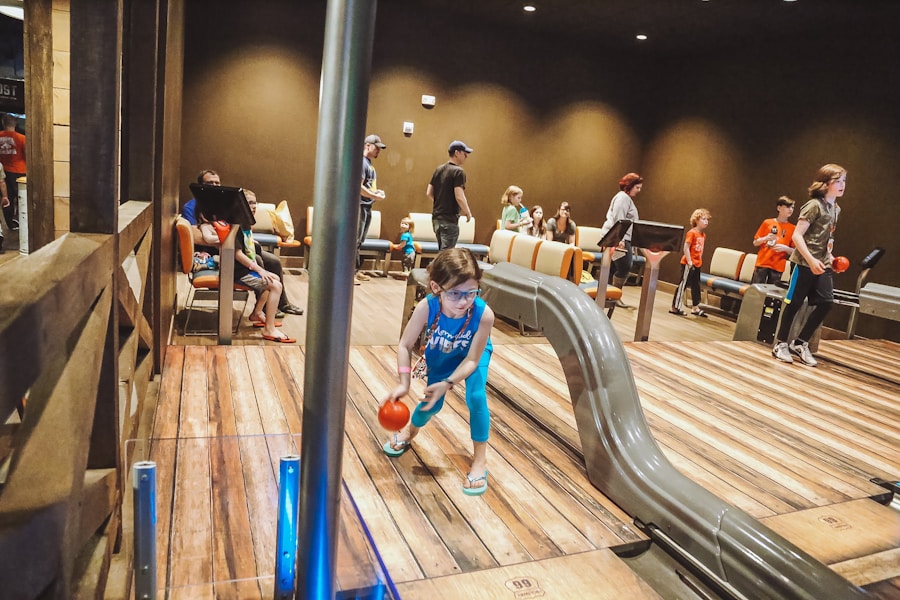
Bowling is also a popular recreational activity for families and friends looking for a fun and affordable way to spend time together. Many bowling alleys offer special events such as cosmic bowling, where the lights are turned off and neon lights illuminate the lanes, creating a party-like atmosphere. In addition to cosmic bowling, many bowling alleys also offer arcade games, food and drink options, making it a popular destination for birthday parties and other special occasions.
The Role of Coaching and Training in Professional Bowling
Coaching and training play a crucial role in the development of professional bowlers. Many top professionals work with coaches who help them refine their technique, improve their physical fitness, and develop mental strategies for competition. Coaches work with bowlers on all aspects of their game, from physical conditioning to lane play strategy, helping them maximize their potential and achieve their goals.
In addition to coaching, professional bowlers also engage in regular training regimens that include strength training, flexibility exercises, and mental conditioning. Many top professionals work with personal trainers who help them develop customized workout plans that target specific areas of their physical fitness. Mental conditioning is also an important aspect of training for professional bowlers, who often work with sports psychologists or mental coaches to develop strategies for managing stress, maintaining focus, and staying motivated.
The Financial and Career Implications of Professional Bowling
Professional bowling can be a lucrative career for top athletes who are able to achieve success on the PBA Tour and other international competitions. The top professional bowlers can earn substantial prize money from tournament winnings, sponsorships, endorsements, and appearance fees. In addition to prize money, professional bowlers can also earn income from coaching, teaching clinics, and pro shop ownership.
However, it's important to note that professional bowling is a highly competitive sport with a limited number of spots available on the PBA Tour. As a result, many professional bowlers supplement their income by working part-time jobs or pursuing other business ventures outside of the sport. Despite these challenges, professional bowling can be a rewarding career for those who are able to achieve success at the highest level.
In conclusion, professional bowling is a challenging and dynamic sport that requires a high level of skill, physical fitness, and mental focus. The competitive environment in professional bowling is fierce, with top athletes from around the world vying for substantial prize money and prestige. In addition to its competitive aspects, bowling also has a strong social and recreational component that makes it an enjoyable activity for people of all ages. Coaching and training play a crucial role in the development of professional bowlers, helping them refine their technique, improve their physical fitness, and develop mental strategies for competition. While professional bowling can be a lucrative career for top athletes who are able to achieve success on the PBA Tour and other international competitions, it's important to note that it is also a highly competitive sport with limited spots available at the highest level.